If you’re like me and have loved vintage clothing as long as you can remember, you have most likely been introduced to vintage garments through period movies, museum exhibits or books. All of these usually display what the wealthy, the upper crust, used to wear. Clothes worn by regular people were modified, passed down, worn through and few have reached us.
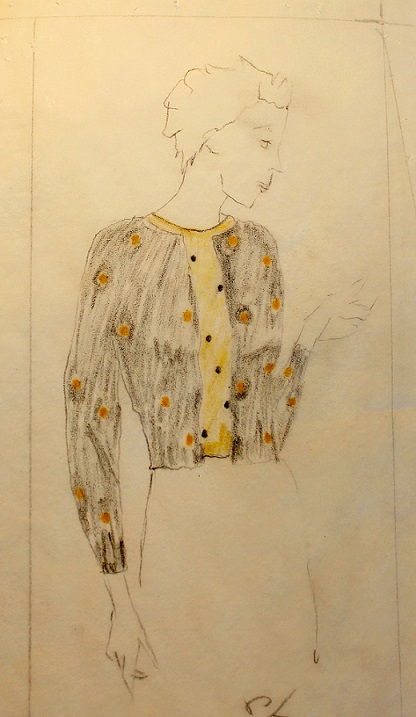
Personal memories also get in the mix for those of us who have had a long love affair with clothing and have noticed from an early age how they were put together. Little details that we now use when we make our own clothes and match fabrics. For example, I still remember a twin set that my mother used to wear in the mid-1960s. The color of old gold and black. Or her early 1970s sleeveless, long black fitted dress with a high neckline decorated with a narrow band of sew-in tiny rhinestones. No other adornments; the dress was the focal point.
We are incredibly fortunate that old magazines of the practical type —with instructions, patterns to be reproduced, tips on assembly and material—, as well as vintage sewing patterns are now widely available.
The over-the-top extravagant, delicate or exotic garments are marvelous to look at, but were I to reproduce them as is, I would feel over-dressed. Putting aside the most marvelously impractical aspects of vintage, there are many other tried-and-true styling characteristics that I reproduce regularly in my own clothes.
Contemporary Mind Set
I pick my styling elements mostly from the early to mid-twentieth century. But, if they are overly elaborate, I rarely try to reproduce them in their entirety, I want to wear and enjoy the clothes, and we live in the 21st century.
One of the first style elements that comes to mind is what is still termed ensemble (together) in museum collections to describe a set, either several pieces of garments (such as a dress and matching coat), or the garment and its matching accessories. In a contempary mind set, I call this element “echos”. Meaning a feature or color or textile pattern that I repeat, sometimes in a variation, on another portion of the garment.

Styling that is easy to get into
Linings made with fabrics that are not lining are a private indulgence. You know you’re wearing it and others may catch glimpses when, say, your jacket is unbuttoned, or when you sit down and the front panels of a coat fall open. And of course it thrills me when I remove a coat and the lining becomes exposed, especially if I’m wearing a matching garment or accessory.
Here are two examples. A light-weight coat with a sumptuous floral lining. I kept a very large piece of the silky lining to make the matching scarf. Another light-weight coat with a dark tartan for the lining. The fabric was originally intended only for what ended up being the matching pinafore dress. I loved the colours so much that I had to carry the fabric onto another garment besides the sleeveless dress.

Early to mid-1990s coats with dress and scarf that match the lining. 
Mid-1990s pale coat with dark tartan lining and matching pinafore.
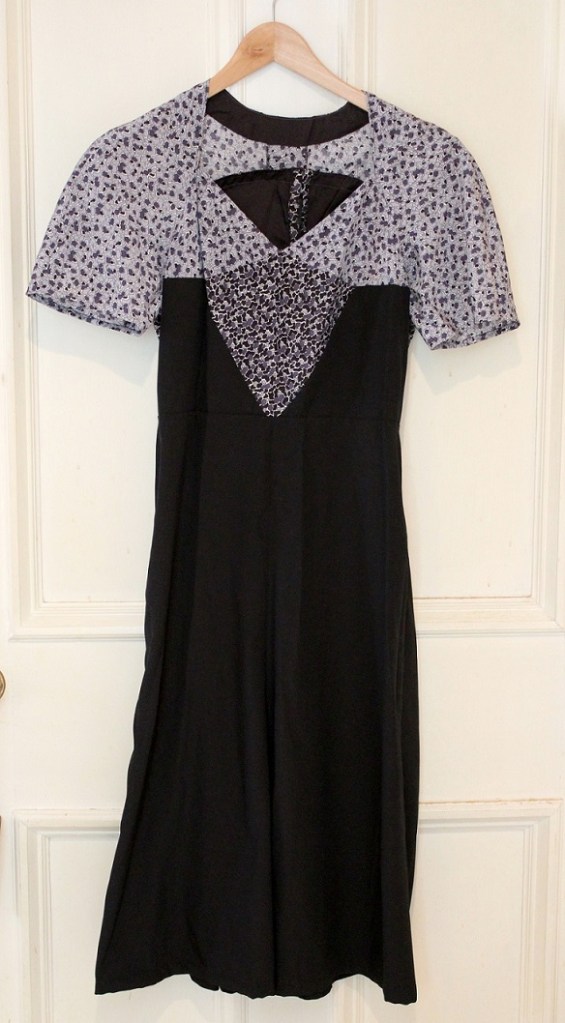
Often I’ll use only a portion of a vintage garment I see in an old magazine or movie, a detail that catches my eye. The 1941 dress below is one such garment. At the time I wanted a dress, yes, but short sleeves and light enough that I could wear with a matching shirt, cardigan, jacket. I still wanted the whole ensemble to appear as if it belongs together.
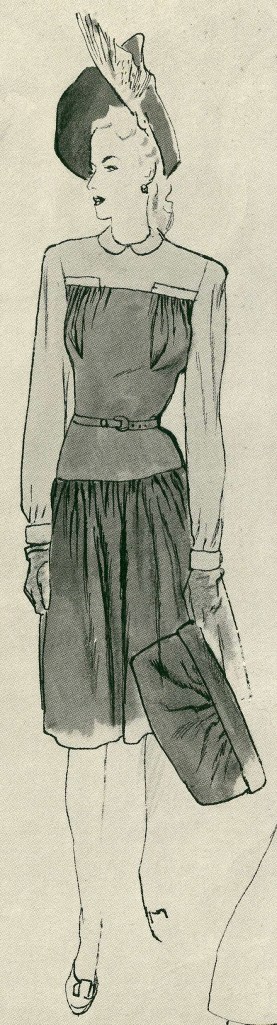
The original magazine fashion sketch is in black and white, but I could guess that the color would be tonal, in increasing intensity as it goes down below the hips. Also, the proportions are important: a small band at the shoulders, the midriff, and a longer area with the third color. For my version, I used a light-weight fabric in a reverse pattern to define the shoulders area and the midriff.
When I go to a fabric store, to a church basement bazaar or a thrift store to get my hands on a piece of fabric, I get the same feeling as when I go to a book store: time disappears and the pleasure of looking, assessing and holding the materials captures all of my attention. When mulling over a project such as this 1941 dress that I intended to transform into a 2-piece set, I pay particular attention to fabrics that belong to a given collection because they sometimes offer variations within a same pattern.
In Canada, where I live, fabrics that belong to a particular supplier’s or designer’s collection are displayed together for the given season, and I look at the variations in print, coloring, weight in each of the collections to decide which one would be more adequate if I were to start mixing fabrics from several bolts within a collection.
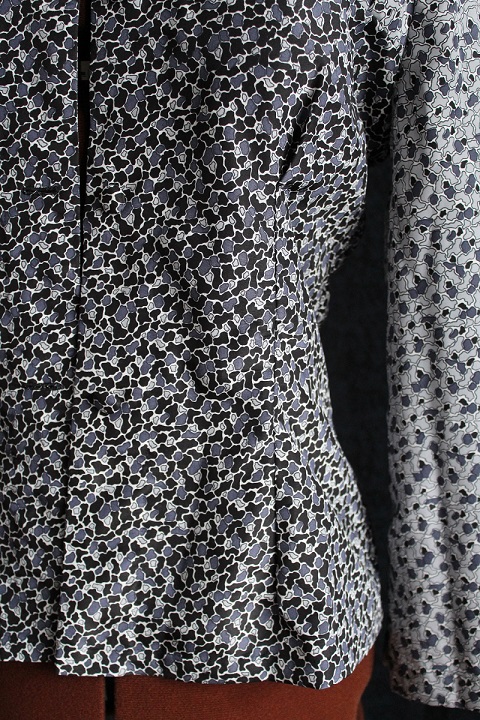
Top & bottom of dart left open to create pleat 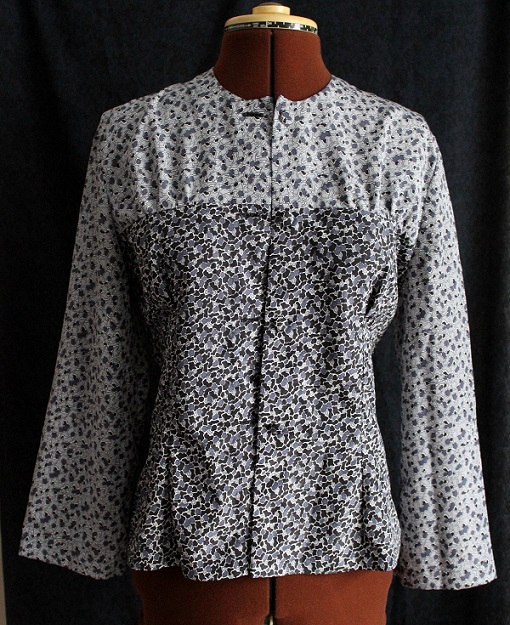
Two-tone front pleated bodice 40s 
Two-tone greys 40s style; back yoke lower & deeper darts
I’ll cover the dress that completes the 2-piece set in a separate post because I re-drafted the only piece that caught my eye in a store-bought sewing pattern (Vogue 8042): the bodice, to which I attached a simple A-line skirt. The third color that I selected to complete the 3-tone ensemble was black.
 Sewing Vintage & Illustrated Stories