Below is what I consider my foundation books and tools for designing in the vintage style. Several of the books are available second-hand and some are inexpensive. Abebooks and Alibris are good online marketplaces to start looking for second-hand copies. This section will expand as I go through my notes, magazines, and cuttings so make sure that you check back.
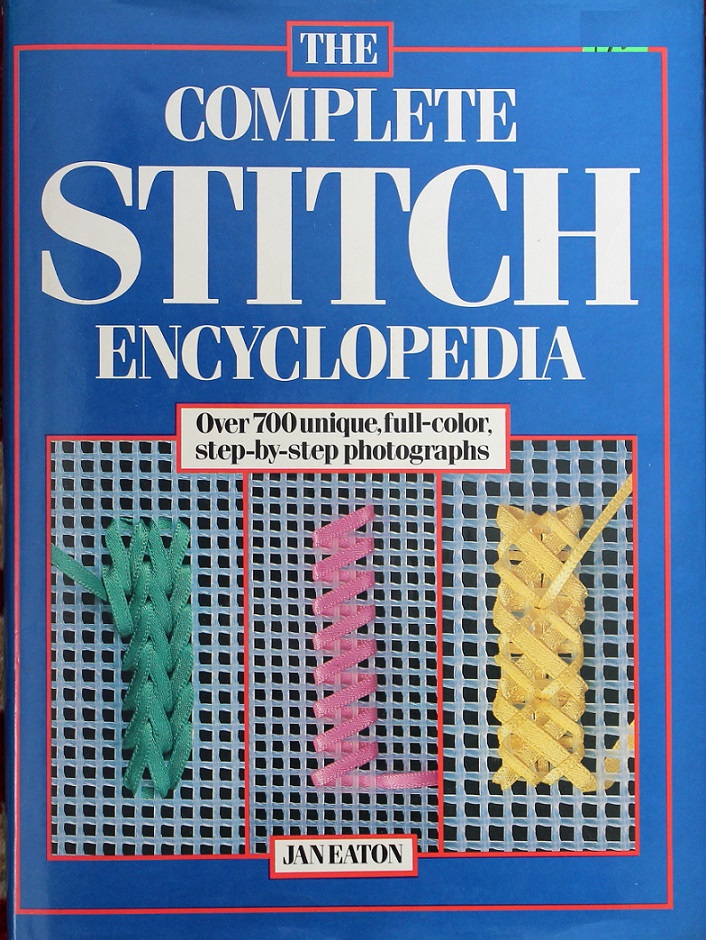
For do-it-yourself embellishments such as appliqués, top stitching for seams and between joined pieces. The Complete Stitch Encyclopedia, a reference book and self-instruction manual in one. My copy dates from 1987.
From the back jacket: “Includes many heretofore unknown stitches: ancient Chinese embroidery, complex stitches from the Middle Ages, fanciful work from the sixteenth and seventeenth centuries, as well as representative needlework from American Indians.”
I often work with remnants and old clothes that I take apart, so it is not unusual for me to run out of a given fabric and finishing the garment by using multiple textiles. Embroidery stitches are very handy for top stiching or decorating joined pieces.
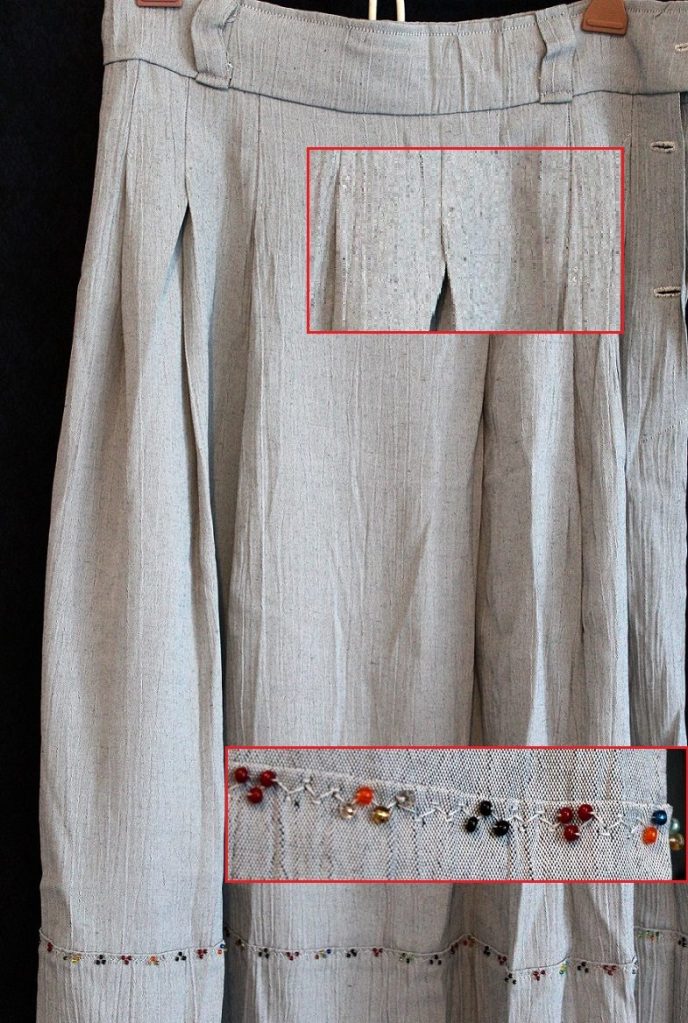
Pleats at the hips are secured by two embroidery stitches, and beads are embroidered where pieces join. 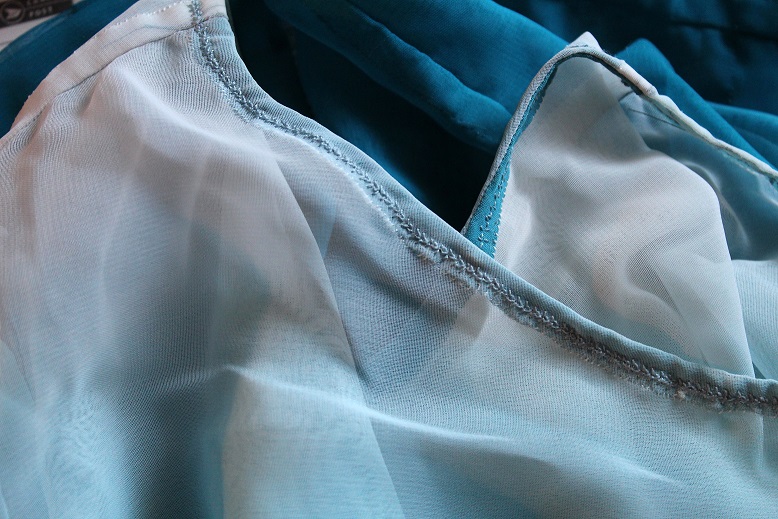
Neckline of a blouse decorated with embroidered top stitch.
Complete Stitch Encyclopedia, visuals. 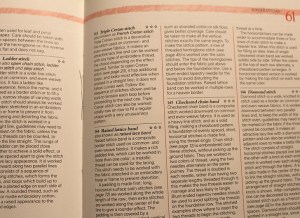
Complete Stitch Encyclopedia, written instructions.
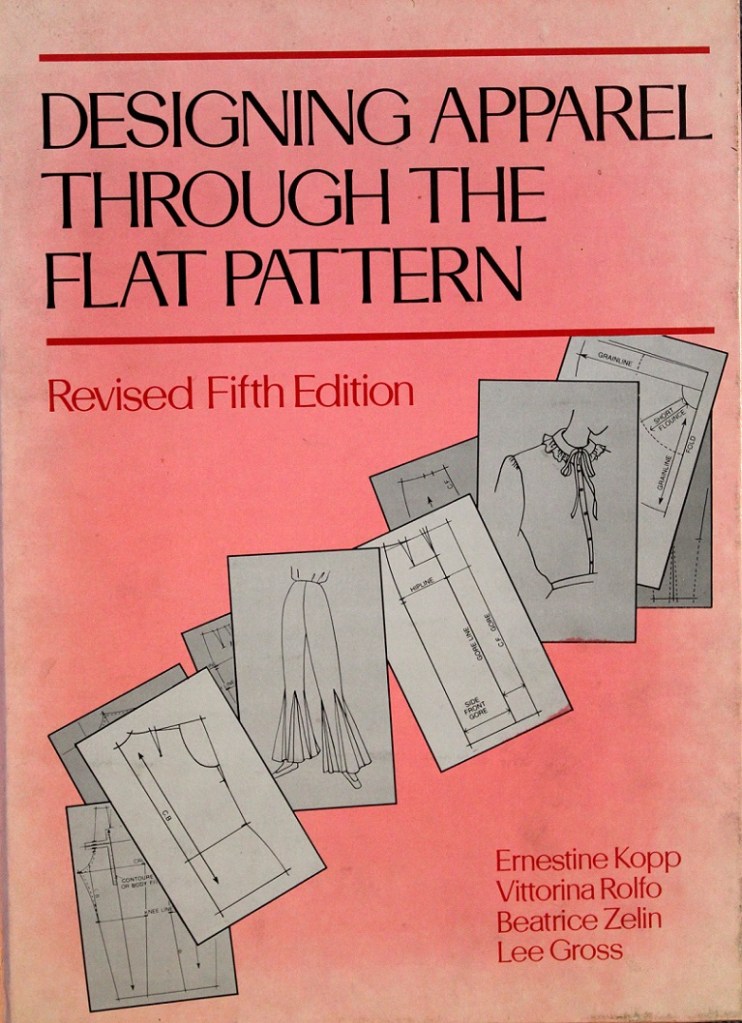
Desining Apparel Through the Flat Pattern. I got this book in the mid-80s when I took my first pattern drafting class in a technical community college. Before computer-assisted design, this was our teacher’s favorite. Well, well loved and much used. Step-by-step instructions, the book is a must-have. I have a copy of the fifth edition.

Four Hundred Years of Fashion. The book catalogues the most representative textile and costume acquisitions of the Victoria & Albert Museum. The interest of this book is that the descriptions are done by curators; they give a context and, most importantly, they often describe the construction of the garment. My copy dates from the early 1980s.
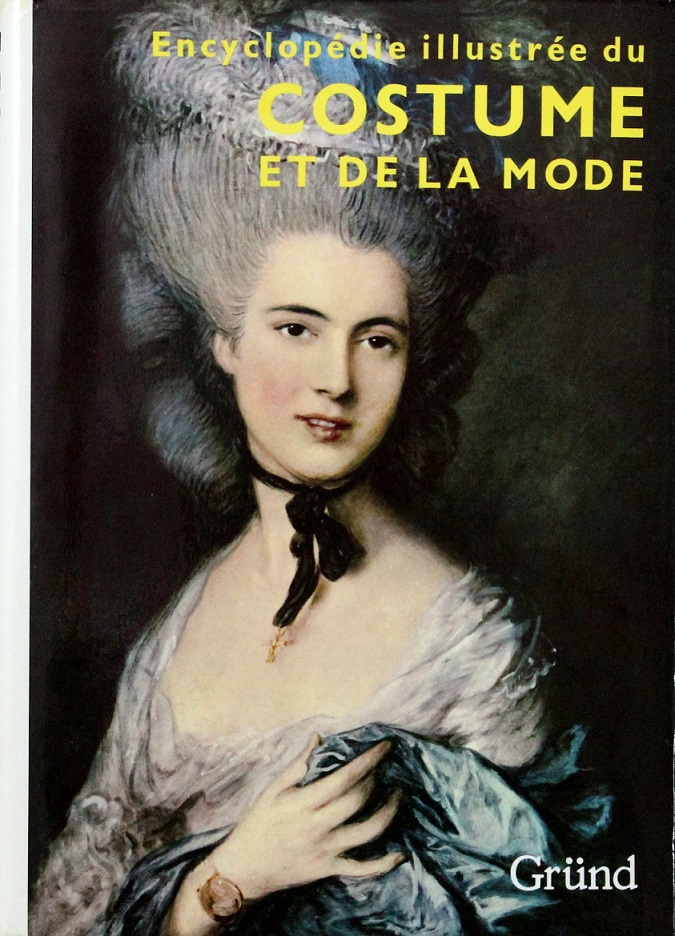
Encyclopédie illustrée du costume et de la mode. Articles written by specialists, images taken from engravings, paintings, illustrations. The contents are divided in two parts: the first provides a brief history of costumes from the antiquity to the early 1980s; the second, covers apparels in more detail. My copy is a seventh reprint from the late 1980s.
For inspiration, I love the fashion history books published by Taschen, particularly the two-volume publication from the collection of the Kyoto Costume Institute.
And of course the glorious digital collections to which we now have access. Even if I can’t look at their pieces from the side, or the back, the digital collections of these museums are nevertheless very inspiring. I’ll list on my Pinterest board Vintage Ideas for Sewing the smaller, specialised online museums as I sort through my reference material.
 Sewing Vintage & Illustrated Stories